
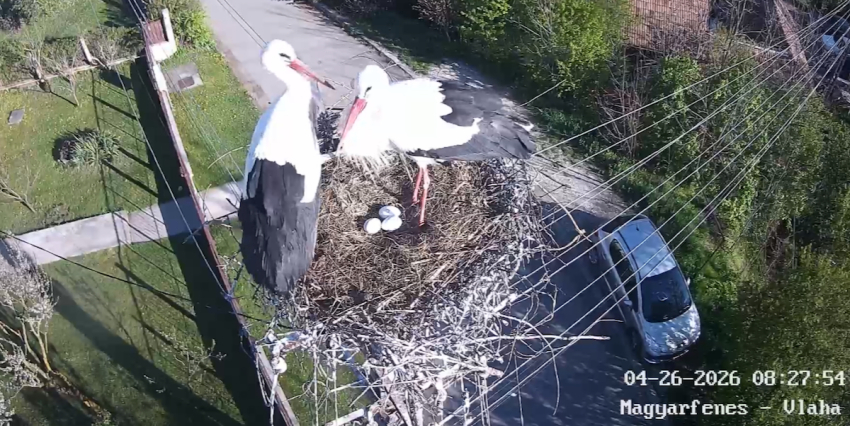
The stork pair in Vlaha seems content with a smaller family this year and is making an attempt to raise just three chicks. The female laid her first egg on the 22nd of April, followed by a second on the 24th of April and a third on the 26th of April. Perhaps the pair realized they had started breeding later than usual, and that raising fewer chicks would give each one a better chance of survival by reducing competition for the food brought back to the nest.
This is the tenth year that we have been monitoring the nest with a live webcam, and over the past decade the latest first egg had previously been recorded in 2022. Even then, Leske laid her first egg nine days earlier than this year's female. According to our calculations published last year, the 22nd of April was the very last date on which laying the first egg would still leave enough time for the chicks to hatch, grow, and be ready for the autumn migration. Over the past ten years, the first chicks have hatched 34–35 days after the first egg was laid, so we expect this year's first hatchlings to emerge on the 26th or 27th of May.
The pair takes turns incubating the eggs while continuing to repair their nest. The male usually returns from his foraging trips carrying branches or dry grass in his bill to reinforce their home.
The weather, however, has not been on the storks' side. There has been no rain for weeks, and over the past three mornings temperatures have dropped below freezing before dawn.